Send This to Your Dad
Because GLP-1s were never just about weight loss.

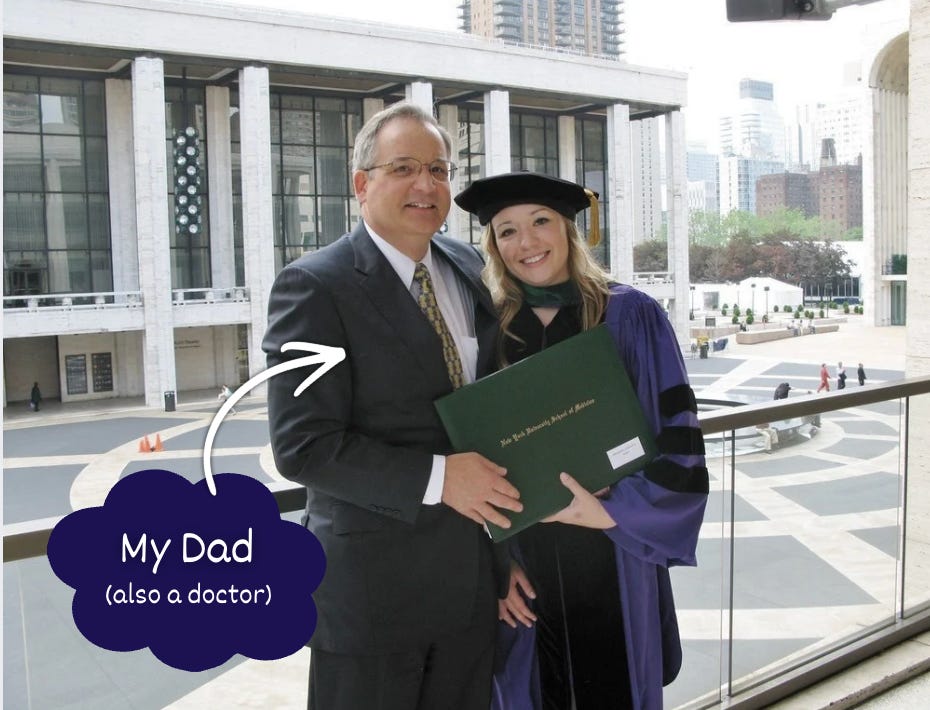
As a physician specializing in obesity medicine, I’ve spent years helping patients navigate GLP-1 medications. I’ve prescribed them to thousands of patients, wrote the first book about them, and created SoWell after seeing the same challenges come up again and again: not enough protein, not enough hydration, digestive side effects, and difficulty maintaining muscle.
SoWell is the support system I found myself wishing more patients had from the beginning.
And because I spend so much time explaining that support, I hear some version of the same response almost every day.
“My husband needs this.”
“My friend needs this.”
“I need this.”
Usually, they mean the SoWell products. Sometimes they mean the whole conversation: the book, the education, the support, the reminder that the medication is only one part of getting healthier.
But there’s one response that gets me every single time.
“My dad needs this.”
I’m a daughter, after all, and I’ve spent years having many of these same conversations with my own father.
Every time someone says it, I find myself wondering about the story behind it. Is he already taking a GLP-1 and struggling? Has he spent years dismissing health concerns everyone around him can see? Is he one of those men who insists he’s fine, even when he’s not?
I never know the answer.
But every time I hear it, I think about my own dad—and about how long it took me to convince him that these medications might be for him, too.
The Hardest Patient I’ve Ever Had
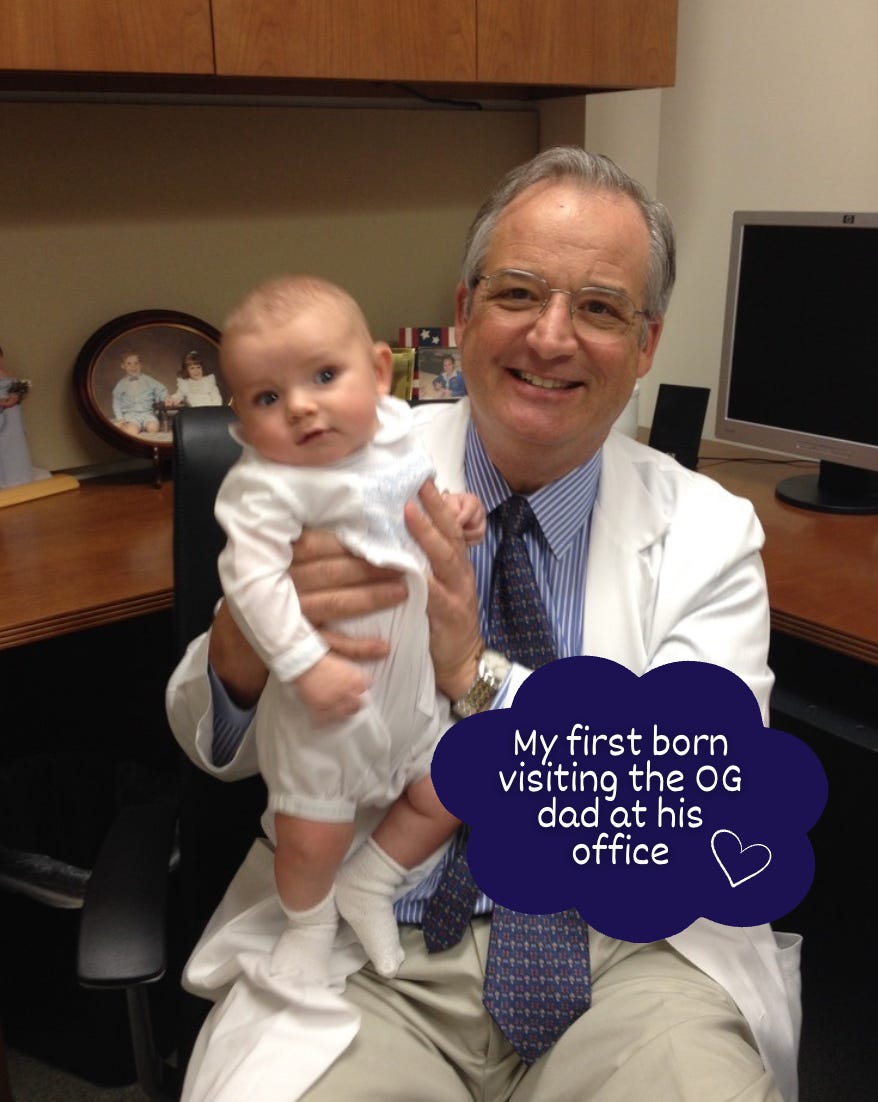
My father is a physician. Like many doctors, he tends to believe that most problems can be managed with common sense, discipline, and a little less fuss.
For years, I suggested that he might benefit from a GLP-1 medication.
He didn’t think he needed to lose weight.
He didn’t think he needed to do anything drastic about his sleep apnea.
He didn’t think he needed to reduce his cardiovascular risk beyond “the traditional” way.
Like many men, he simply didn’t see himself as the person GLP-1 medications were designed to help.
If a physician—and the father of the person who literally wrote the book on GLP-1s—didn’t think he was the target audience, it’s not hard to understand why so many other men feel the same way.
Eventually, after many conversations—and yes, some pleading—he decided to give it a try. I was thrilled, and so was his own doctor.
A few weeks later I checked in.
“How are you feeling?”
“Fine.”
“What are you eating?”
“Not much. I don’t even need breakfast anymore.”
Reader, I nearly lost my mind.
“Daaaaaad,” I replied with all of the anguish of a teenager. “The goal isn’t to stop eating! Did you even read my book?”
The irony is that my father is incredibly smart. He’s also exactly the kind of person who assumes he can figure it out himself.
Which, as it turns out, makes him exactly like many of the men I see in practice.
This Isn’t Just About Weight Loss
One of the reasons I’ve become increasingly passionate about talking to men about GLP-1 medications is because I think the public conversation has gotten the story backwards.
Women are more than twice as likely as men to take GLP-1 medications.
Yet cardiovascular disease kills more men than women under 65. Sleep apnea—one of the most destructive and undertreated consequences of excess weight—is two to three times more prevalent in men.
The blood pressure that’s “a little elevated.”
The blood sugar that’s “borderline.”
The snoring that moved his wife to the other room a decade ago.
The people who often stand to benefit the most are the least likely to show up.
It’s not that men don’t care about their health. It’s that these medications entered the culture as weight-loss drugs. For a lot of men, weight loss feels like a vanity project—and vanity, they’ll tell you, isn’t for them.
Research from the Kinsey Institute confirms what I see in practice every day: 60% of men taking GLP-1 medications report fearing judgment or shame for taking them—nearly double the rate of women.
So they don’t ask.
Or they convince themselves they’re not the kind of person these medications are meant for. Even though these medications have profound impact on overall health, independent of weight loss.
The landmark SELECT trial demonstrated that semaglutide reduced the risk of heart attack, stroke, and cardiovascular death by 20% in people with obesity and established cardiovascular disease. The majority of participants were men.
And the list of conditions impacted by these medications keeps growing:
• Cardiovascular disease — The SELECT trial demonstrated a 20% reduction in heart attack, stroke, and cardiovascular death
• Obstructive sleep apnea — The SURMOUNT-OSA trial led to Zepbound becoming the first FDA-approved medication for moderate-to-severe sleep apnea in adults with obesity
• Type 2 diabetes — SUSTAIN, PIONEER, REWIND, and SURPASS trials have demonstrated improvements in blood sugar control and cardiometabolic health
• Osteoarthritis of the knee — The STEP 9 trial demonstrated meaningful improvements in pain and function
• Fatty liver disease (MASH/MASLD) — The ESSENCE trial demonstrated significant improvements in liver disease activity
• Kidney disease — The FLOW trial demonstrated reduced progression of chronic kidney disease
• Cancer risk — Emerging data continues to suggest lower rates of multiple obesity-associated cancers among GLP-1 users
Twenty years ago, we would have called GLP-1s weight-loss drugs. Today, that description feels increasingly incomplete.
The strongest evidence for GLP-1s is no longer just about weight loss. It’s about reducing cardiovascular risk, improving sleep apnea, protecting kidney health, and treating the many diseases that travel with obesity.
When I think about my dad, that’s what I care about.
Why the Ones Who Do Start Quit
Men are significantly more likely than women to discontinue GLP-1 medications during the first year. In some studies, discontinuation rates approach 80%.
Many try to white-knuckle the experience alone.
They don’t call their doctor when the nausea won’t quit, the fatigue sets in, or the muscle starts disappearing because they’ve stopped eating.
They figure that’s just the deal. And then they decide that GLP-1 medications just aren’t for them.
Stopping carries its own consequences: cardiovascular events, blood sugar spikes, and rapid weight regain.
In my experience, the medication is very rarely the problem.
It’s the complete lack of support.
This Father’s Day

If you’re reading this and thinking about your own dad, send him this essay.
And if your dad is already taking a GLP-1, check in on him.
Ask him what he’s eating.
Ask him if he’s getting enough protein.
Ask him how he’s feeling and if he needs more support.
Because one of the biggest mistakes I see is people assuming the medication does all the work. The patients who do best are often the ones who have the right support, the right information, and someone paying attention.
Every time someone tells me, “My dad needs this,” I pause.
Maybe it’s because I’m a physician.
Mostly, I think it’s because I’m a daughter.
And because I know exactly what they’re trying to say.
Happy Father’s Day!
— Dr. Alexandra Sowa, MD
If Your Dad Is Ready
If your dad is wondering whether a GLP-1 might be right for him—or if he’s already taking one and wants to better understand the science behind these medications—The Ozempic Revolution was written for exactly this moment.
💧 The SoWell GLP-1 Support System
If your dad is already taking a GLP-1, SoWell was designed to support the challenges I see most often in practice: protein intake, hydration, digestive health, and maintaining muscle during treatment.
Because the goal was never just to get him on the medication.
The goal was to keep him healthy enough for everything that comes next.
✅ convinced - thanks friend!